- Marketing Archive
- Posts
- SPECTACLE MARKETING: HOW TO MANUFACTURE ATTENTION
SPECTACLE MARKETING: HOW TO MANUFACTURE ATTENTION
Analysing the best spectacle creators ever and how they stir up so much attention...

Niall Ratcliffe
December 21, 2025
In partnership with

Morning!
I’m sitting in Skopje airport in North Macedonia, my eyes are stinging, and I am straining to stay awake. Last night, I had my first experience of a Macedonian Kafana. It was our Christmas social with some of our team members out here and it was wild. An experience I won’t forget anytime sure, not sure I can put it into any more words than that.
But today I’m not breaking down how I stayed in a Kafana for 5 hours last night. Instead, I want to talk about why I woke up at 4:30 AM (just 3.5 hours after going to sleep) that same night and the marketing that made it happen.
Let’s get into it!
THE ESSAY
Last night, I walked into my hotel room at 00:40 feeling absolutely knackered. 3 busy days of travelling, meeting team members, a jam-packed last week of work. It’s safe to say I was finished. Yet when my head finally hit the pillow with my eyes screaming at me to close them, I set my alarm for 4:30 AM.
Not because I am some Jocko Willink wannabee. Not because I was going to do some intense morning workout. I was waking up in the early hours of the morning to watch Jake Paul Vs Anthony Joshua.
There is next to nothing that could convince me to get up at 4:30 AM on a Saturday morning. But I had to for this. One of the best heavyweights of my lifetime was fighting an ex-Youtuber who is 30lbs lighter than him.
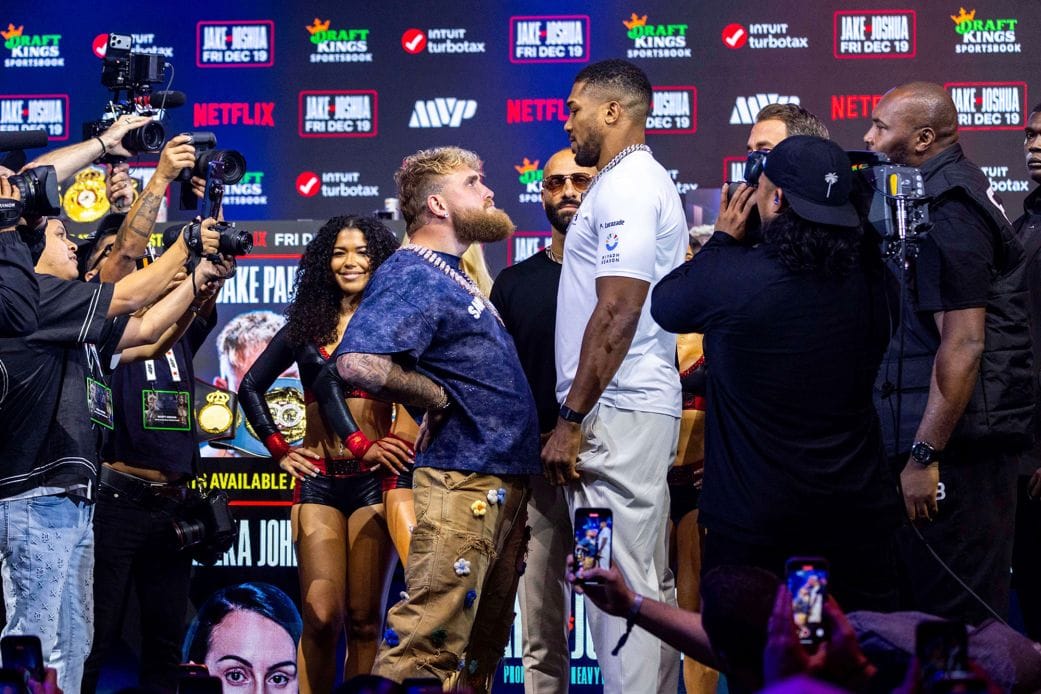
It was a true David Vs Goliath match-up. A true spectacle. I couldn’t miss it.
It was a fight that should never have happened. A physical mismatch, a power mismatch, a skill mismatch. No one knew exactly what was going to happen, but whatever did happen, I wasn’t going to miss it.
So the clock struck 4:40, my alarm went off, and I shuffled around my dark hotel room to find my headphones. But as I sat there on the hotel room chair, the only thing I could think about was how impressive it was that these men had created such a spectacle to get me to wake up in the middle of the night to watch it.
No matter how the fight played out, these guys were incredible marketers. Particularly Jake Paul, and particularly with what I call ‘Spectacle Marketing’.
So fought for my life to keep my eyes open, I stayed awake by trying to think of other people, like Jake, who made millions by creating these ‘Specatacles’.
The first name that sprang to mind was P.T. Barnum.

If you’ve never watched The Greatest Showman, P.T. Barnum was an American showman, best known for the Barnum & Bailey Circus.
Barnum ties in here as he wasn’t famous for having the best circus. He was famous because he understood how to create a spectacle and make people curious enough to show up.
He made his money by putting things in front of people that felt unlikely, strange, or just on the edge of believable.
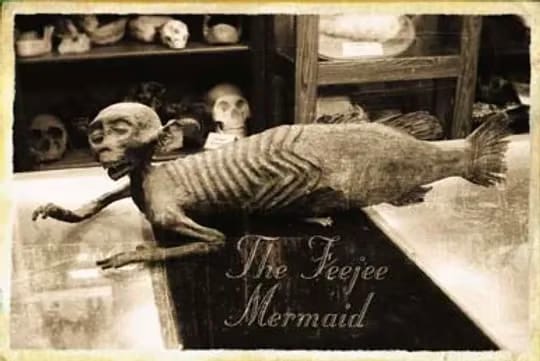
One of his most well-known attractions was the “Feejee Mermaid”, which was marketed as a real-life mermaid brought back from distant shores. In reality, it was a fish and a monkey stitched together. But that didn’t matter. People paid to see it because they wanted to know whether it might be real.
He did the same with everyone in his circus:
Joice Heth (The 161-Year-Old Nurse) An elderly woman whom Barnum claimed was the 161-year-old nurse of George Washington (she was in her 70s and just looked old).
William Henry Johnson (Zip the Pinhead) An African American man with microcephaly (a condition where the head is smaller than normal). Barnum put him in a furry suit and claimed he was a "non-human" creature caught in the wild.
Chang and Eng Bunker (The Siamese Twins) Conjoined twins joined at the sternum. Barnum marketed them as a biological wonder from the "mysterious East".
None of this worked because the acts were extraordinary on their own, they all had reasonably normal human conditions which existed all over the world. Barnum just knew how to frame things in a way that made people feel like they’d miss out if they didn’t see it for themselves. Quite like Jake Paul does with his fights.
Maybe a better example is what Richard Branson was doing with Virgin.
To get attention on Virgin, Richard Branson has:
Drove a tank through Times Square to launch Virgin Cola in the US
Appeared naked on a building to launch Virgin Mobile
Appeared in a bridal dress at the launch of Virgin Brides

I say this is a better example because with everything Richard did there is a bigger message to it. It wasn’t attention at all costs, it was attention to spread a message.
He drove a tank through Times Square crushing Coca-Cola cans → To show the public they were competing with Coca-Cola
He appeared naked for Virgin Mobile → To tell Americans Virgin Mobile had no hidden fees
Each spectacle was tied to a big message.
Which brings me to one of my favourite quotes from Mr Steven Bartlett…
When his social media agency, SocialChain, was making headlines and getting featured in all of the UK newspapers, the thing the reporters were talking about the most was this stupid £16,000 blue slide he’d installed in their Manchester HQ.

When someone asked Steve why he wasted all that money on a slide and a ball pit, he responded:
“Useless absurdity will define you more than useful practicalities.”
Meaning people will remember and talk more about the absurd things tied to your brand than any practical thing you’re doing. And the press SocialChain got around the slide showed that.
But just like Branson, Steve had a message behind the slide too. It pushed this perception that they were a bunch of kids in Manchester who were absolutely killing it.
And the same thing goes for Jake’s fight with Anthony Joshua that I woke up at 4:30 AM for. It puts this idea in your mind: “Is Jake actually a world-class boxer?”
People say attention is the new currency, and in many ways it is. But only when you’re able to harness it to drive brand name value around the right message. When it helps you become more known for something.
But that’s enough examples. How can you master spectacle marketing in 2026?
Here’s how I see all of the people we just talked about approaching it:
Deeply understand your one big message
All attention is not equal. These guys that I’ve mentioned in this essay are the best to ever do it because they understand the message they’re trying to get across. Every spectacle-style marketing campaign has to start with the message you’re trying to get across. That’s the core of the campaign.
Understand what grips your audience’s attention
The next thing I notice as I analyse these people is that they understand what gets their audiences’ attention - which is different for each of them.
When it comes to Jake Paul, he knows that people want to see him get knocked out. That’s what gets attention. So he set up a huge fight where everything seemed clear that he was going to get knocked out. He did it when he fought Mike Tyson and even more so when he fought AJ - and it caused a massive stir on social media when the fights were announced.
But Branson approaches his stunts from a different perspective. He goes for newsworthy moments that would make headlines in newspapers. It’s more of a mainstream press approach.

If you want to create a true spectacle, you have to deeply understand your audience, the channels they consume information on, and what will get their attention on those channels.
Swing for the fences & take it up 10 notches
Last but not least, you have to just pull back the bat and swing for the fences. I know it seems obvious, but people think they can replicate something like these stunts on a smaller scale. That’s not how it works though. If you want to replicate them, you have to match the level they’re at. So take your idea and take it up 10 notches.
Right, that’s all I’ve got for you today. I hope it inspired you to take some swings in 2026 and create some spectacles.
Until next Sunday.
— Niall
WAIT… BEFORE YOU GO
Rate this week's essay! |
BROUGHT TO YOU BY
Shoppers are adding to cart for the holidays

Over the next year, Roku predicts that 100% of the streaming audience will see ads. For growth marketers in 2026, CTV will remain an important “safe space” as AI creates widespread disruption in the search and social channels. Plus, easier access to self-serve CTV ad buying tools and targeting options will lead to a surge in locally-targeted streaming campaigns.
Read our guide to find out why growth marketers should make sure CTV is part of their 2026 media mix.